
Share this product :
Industrial Salt
- Origin
- : China
- CAS Number
- : 7647-14-5
- HS Code
- : 25010010
Basic Info
- IUPAC Name
- : sodium chloride
- Molecular Formula
- : NaCl
- Molecular Weight (g/mol)
- : 58.4400
- Synonyms & Trade Names
- : Industrial salt; Rock salt; Sodium chloride; Common salt
- Purity / Assay (%)
- : 98% min
- Grade / Quality Level
- : Industrial Grade
- Physical Form
- : Solid
- Concentration
- : Pure substance
- Appearance / Color
- : White to off-white solid
- Odor
- : Odorless
- Melting Point (°C)
- : 801.0000
- Boiling Point (°C)
- : 1413
- Density (g/cm³)
- : 2.1650
- Solubility in Water
- : Freely soluble (36g/100mL)
- UN Number
- : Not applicable
- H-Statements
- : None
- P-Statements
- : P260
- REACH Status
- : Registered
- Drug Precursor Status
- : Non-precursor
- Storage Class (GHS)
- : 13
- Storage Conditions
- : Cool, dry place; away from moisture
Categories
Share this product :
About Industrial Salt
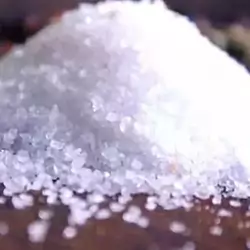
Industrial salt, also known as sodium chloride, has a chemical formula of NaCl. It is an ionic salt and exists as a white crystalline solid. Sodium chloride is widely distributed in nature and is found mostly in oceans (seawater has an average concentration of 2.68 wt% of NaCl). Sodium chloride also occurs in many inland saline waters and in salt deposits in sedimentary rocks as the mineral halite. As a common table salt, sodium chloride is an essential component of most food preparation - imparting flavor to food and providing the sodium nutritional requirement. It is also used for preserving food. Therapeutically, NaCl solution is used to combat dehydration as an electrolyte replenisher, and it is an emetic. The most important applications of sodium chloride in the chemical industry are in making a number of important industrial chemicals such as hydrochloric acid, sodium hydroxide, sodium carbonate, and metallic sodium. Other uses are in dyeing and printing fabrics, glazing pottery, in making soap, and for curing hides.
Manufacturing Process
Sodium chloride exists in abundance naturally as a mineral (halite). They can be mined by pumping water into mines to dissolve the rock salt. The water is then allowed to evaporate such that NaCl is recrystallized and collected for further processing and purification for industrial consumption. Sodium chloride can also be collected by evaporating brine from underground salt deposits and seawater. Saturated brine is then passed through a series of recrystallization ponds where sodium chloride salt will crystallize out. The crystals are isolated, further purified using crystallization, processed and standardized for industrial consumption. The commercial product contains small amounts of calcium and magnesium chlorides.