
Share this product :
Carboxy Methyl Cellulose
- Origin
- : Malaysia, China
- CAS Number
- : 9004-32-4
- HS Code
- : 3912.31.00
Basic Info
- IUPAC Name
- : carboxymethylcellulose sodium salt
- Molecular Formula
- : (C8H16O8)n
- Synonyms & Trade Names
- : CMC; Sodium carboxymethylcellulose; Cellulose gum; E466
- Purity / Assay (%)
- : DS 0.7 min
- Physical Form
- : Solid
- Concentration
- : Pure substance
- Appearance / Color
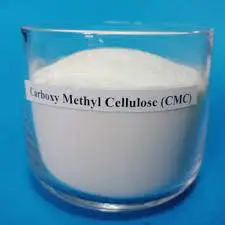
- : White to off-white solid
- Odor
- : Odorless
- Solubility in Water
- : Freely soluble
- UN Number
- : Not applicable
- H-Statements
- : None
- P-Statements
- : P260
- REACH Status
- : Registered
- Drug Precursor Status
- : Non-precursor
- Storage Class (GHS)
- : 13
- Storage Conditions
- : Cool, dry; sealed; avoid moisture
Categories
Share this product :
Brief Overview
Carboxymethyl cellulose, which is also known as CMC, is derived from cellulose by introducing a carboxymethyl group along the cellulose chain. The functional properties of carboxymethyl cellulose depend on the degree of substitution of the cellulose structure. This also allows the molecule to be hydrated, thus becoming soluble. The higher the degree of substitution, the more rapidly it dissolves.
Manufacturing Process
The CMC manufacturing process reaction stages can be divided into two steps: mercerization and etherification. The goal of mercerization is to produce alkali cellulose, whereas the etherification step produces CMC. Mercerization, like all cellulose ethers, begins with cellulose dissolution.
Mercerization is a process in which solvents are used to swell and dissolve the cellulose pulp, increasing the reactive surface and allowing NaOH to penetrate more easily. The swollen and dissolved cellulose is turned into alkali cellulose (or Na-cellulose) in an alkalization reaction when NaOH reacts with the exposed hydroxyl groups. The chemical reaction for mercerization is as bellow
C6H10O5C6H9O4 ∙ OH + NaOH → C6H10O5 ∙ C6H9O4 ∙ ONa + H2O
Etherification At around 50-70ºC, alkali cellulose from the mercerization stage reacts with added MCA in the presence of NaOH in the etherification stage. A hydroxyl group replaces hydrogen with a carboxymethyl group at the molecular level. This process is also known as carboxymethylation. When NaOH reacts with MCA, it produces unwanted byproducts such as reaction salts sodium glycolate and sodium chloride, both of which are considered impurities. As a result, the reaction yields technical grade CMC, which is refined later in the process if necessary.